


The year 2026 brought transformative changes to the federal regulatory framework governing accreditors and their role as gatekeepers of Title IV federal student aid. The Accreditation, Innovation, and Modernization (AIM) regulations, developed, vetted, and published in 2026, take effect July 1, 2027.
As 2026 comes to a close and the higher education community looks ahead to 2027, hear from the leadership of four accrediting agencies as they share perspectives on preparing for implementation, adapting accreditation practices, and engaging with their institutional communities to navigate the changes while keeping educational quality and student success at the forefront.
Join us Wednesday, December 15, 2026, at 2:00 pm ET for this important conversation.
Alison Griffin
Panel Facilitator
Contributor, Forbes
Dr. Heather Perfetti
President, Middle States Commission on Higher Education
Dr. Maria Toyoda
President and CEO, WASC Senior College and University Commission
Dr. Selena Grace
President, Northwest Commission on Colleges and Universities
Dr. Leah Matthews
Executive Director & CEO, Distance Education Accrediting Commission
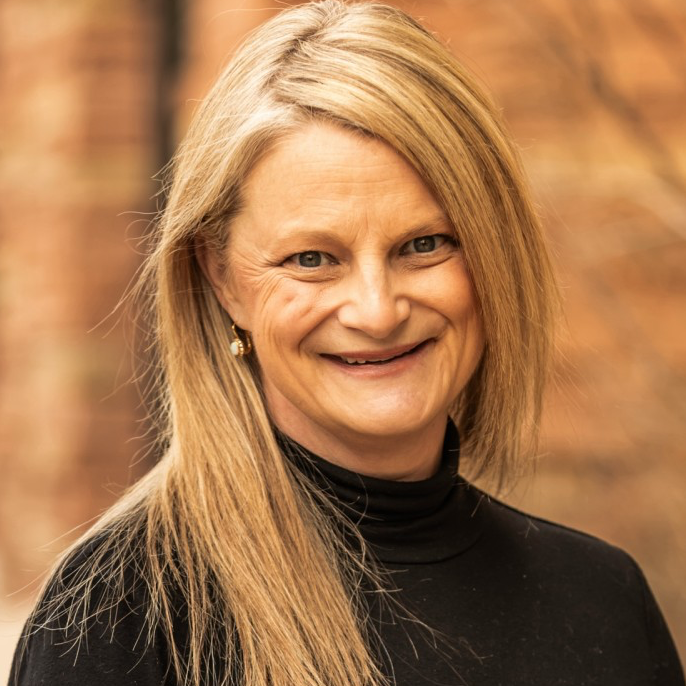
Alison Griffin is a nationally recognized leader in postsecondary education and workforce development policy, bringing federal, state, and foundation experience to America’s most pressing educational and economic challenges.
Her federal career includes two terms as policy advisor to the Chairman of the U.S. House Committee on Education and the Workforce, national policy leadership at Strada Education Foundation, and state policy development with the American Association of State Colleges and Universities (AASCU). She has served as a member of the Bipartisan Policy Center’s Commission on the American Workforce as a contributor to the Postsecondary Pathways Workgroup.
In 2025, Alison authored a report for the American Enterprise Institute examining how data analytics, AI, and continuous monitoring could modernize higher education accreditation. As a Forbes contributor since 2019, she has published nearly 100 thought leadership pieces on education and workforce policy.
She currently serves as Principal at FutureRise, a Colorado postsecondary education foundation, and as Senior Fellow at Colorado Mountain College’s Isaacson School of Communication, Arts and Media. Appointed by Governor Polis in 2019, she is a trustee and former three-term board chair at Colorado Mesa University. Alison earned her M.Ed. from the University of Georgia and her BBA and BA from Southern Methodist University.
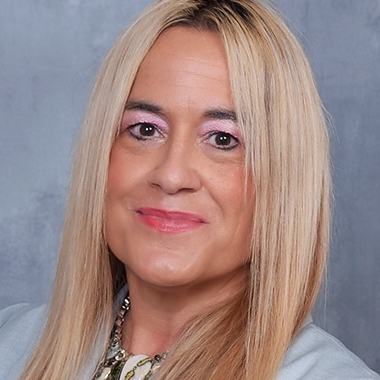
An experienced, high-level executive with a demonstrated and diverse history of working in complex educational environments, Heather F. Perfetti, Ed.D., J.D., became President of the Middle States Commission on Higher Education on July 1, 2020. Over the course of her career, she has made an impact in numerous areas of higher education, including academic and student affairs, faculty affairs, legal and regulatory affairs, strategic planning, policy development, and innovative, organizational change management. She joined the Commission as a Vice President liaison to institutions in January 2015, served as Vice President for Legal Affairs and Chief of Staff in July 2017, and was then elevated to Senior Vice President in July 2018. On June 26, 2019, Dr. Perfetti was named President-Elect to begin her transition to President.
Prior to joining the Commission staff, Dr. Perfetti served as a peer evaluator through on-site evaluation visits, the Committee on Substantive Change, and the Committee on Periodic Review Reports. Her previous positions have included Vice President for Academic Affairs at SUNY Orange (NY) and Allegany College of Maryland; Assistant Dean, Assistant Professor, and Program Coordinator at Darton College (GA); and Assistant Professor at Murray State University (KY). She has held adjunct faculty positions at Georgia Southern University, Barstow Community College (CA), and Darton College.
Dr. Perfetti earned her Doctor of Education degree with specialization in Higher Education Leadership from Northcentral University (CA), the Juris Doctor degree from the University of Mississippi School of Law, the Master of Science degree in Criminal Justice from Troy University (AL), and a Bachelor of Arts degree in English from Frostburg State University (MD).
In addition to her academic credentials, Dr. Perfetti has participated in the American Council on Education’s Institute for Chief Academic Officers and Vanderbilt University’s Peabody Professional Institute on Higher Education Management. In 2022, she was ranked No. 39 on City & State Pennsylvania’s Higher Education Power 100 List, recognizing the most powerful educators in Pennsylvania, and she was ranked No. 31 on City & State New York’s 100 Power List of the most powerful people in New York’s higher education community in 2021. The 2021 publication Exemplars of Assessment in Higher Education: Diverse Approaches to Addressing Accreditation Standards featured Dr. Perfetti’s foreword. Also in 2021, she participated in the United States Department of Education’s negotiated rulemaking through the Affordability and Student Loans Committee as a primary negotiator representing accrediting agencies.
Dr. Maria Toyoda is the president and CEO of the WASC Senior College and University Commission (WSCUC). She began her tenure in March 2025. Toyoda brings strategy expertise and business and political acumen cultivated over nearly three decades as a higher education scholar, professor, and administrator.
As executive vice president and provost at Western New England University, Toyoda led institutional strategy and financial sustainability efforts, overseeing accreditation, assessment, student success, and other key areas. She previously held faculty and administrative roles at Stanford, Villanova, and Suffolk universities.
A distinguished international finance and government scholar, Toyoda has spearheaded interdisciplinary programs domestically and abroad. She has been a fellow at the Council on Foreign Relations and the Social Science Research Council and was a visiting researcher at the International Monetary Fund.
Toyoda earned a bachelor’s degree in human biology from Stanford University and master’s and doctorate degrees in government from Georgetown University.
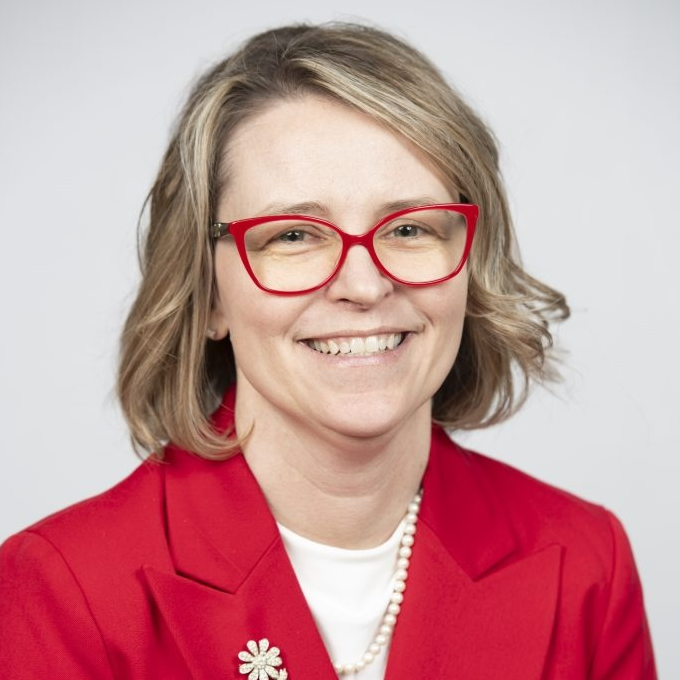
Selena M. Grace, PhD, NWCCU President. She previously served as Executive Vice President for NWCCU and provided strategic counsel on internal affairs and engagement with external state and federal regulatory agencies such as C-RAC, NACIQI, and state/federal legislators. She provided support to a portfolio of institutions with a focus on supporting the Tribal Colleges and federally recognized Minority Serving Institutions. Her work included building internal capacity, strategic planning, supporting substantive changes processes and procedures, supporting peer evaluator capacity, and updates and revisions to handbooks.
Previously she served as Vice Provost for Academic Strategy & Institutional Effectiveness at Idaho State University. Dr. Grace brings significant experience leading transformational change in education policy and practices, as well as bringing diverse constituents together. She was a member of the inaugural cohort of the WICHE Western Academic Leadership Academy, and her previous experience includes Chief Academic Officer at the Idaho State Board of Education where she was the primary author and manager of the Complete College Idaho Plan. Dr. Grace has supported NWCCU as an Evaluator, Evaluation Team Chair, and Accreditation Liaison Officer, and has deep knowledge of accreditation and higher education regulations.
Dr. Grace is a first-generation college graduate. She has a B.A. in English with a writing emphasis and a minor in Native American Studies from Boise State University, an M.F.A. in creative writing, non-fiction from George Mason University, and a Ph.D. in public policy and administration from Boise State University. Her research focused on representation of American Indian teachers in public K-12 education and how that impacted access and performance of American Indian students.
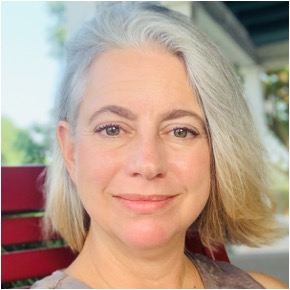
Dr. Leah Matthews began serving as the DEAC Executive Director on April 1, 2013. Dr. Matthews came to DEAC from her previous position as Vice President for Recognition Services at the Council for Higher Education Accreditation (CHEA), the national coordinating organization for higher education accrediting organizations. In that role, she managed the CHEA recognition process for 60 accreditors that provide regional, national and programmatic accreditation.
Prior to working with CHEA, Dr. Matthews served nearly 12 years on the staff of the Accrediting Commission for Career Schools and Colleges. Prior to joining ACCSC, Dr. Matthews worked for five years as a civilian based at the U.S. Army Japan Headquarters in Zama, Japan, where she directed family support services and education programs for children and youth. Dr. Matthews also taught for several years in the Baltimore City Schools system.
Dr. Matthews frequently speaks on the topic of accreditation and distance education. She served as a non-federal negotiator for the U.S. Department of Education’s 2014 and 2019 Rulemaking Sessions on multiple areas that included distance education and state authorization. Dr. Matthews served on the steering committee and executive council of the WICHE Cooperative for Educational Technologies (WCET) from 2016-2019; as vice president of the International Network for Quality Assurance Agencies in Higher Education (INQAAHE) board of directors from 2018-2020; and as a board member of the National Council for State Authorization Reciprocity Agreements (NC-SARA) from 2016-2021.
Dr. Matthews earned a Bachelor of Arts in Music and Education from Westminster College, New Wilmington, PA; a Master of Public Administration from the University of Oklahoma and a PhD in Higher Education from George Mason University, Fairfax, Virginia.